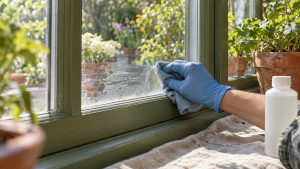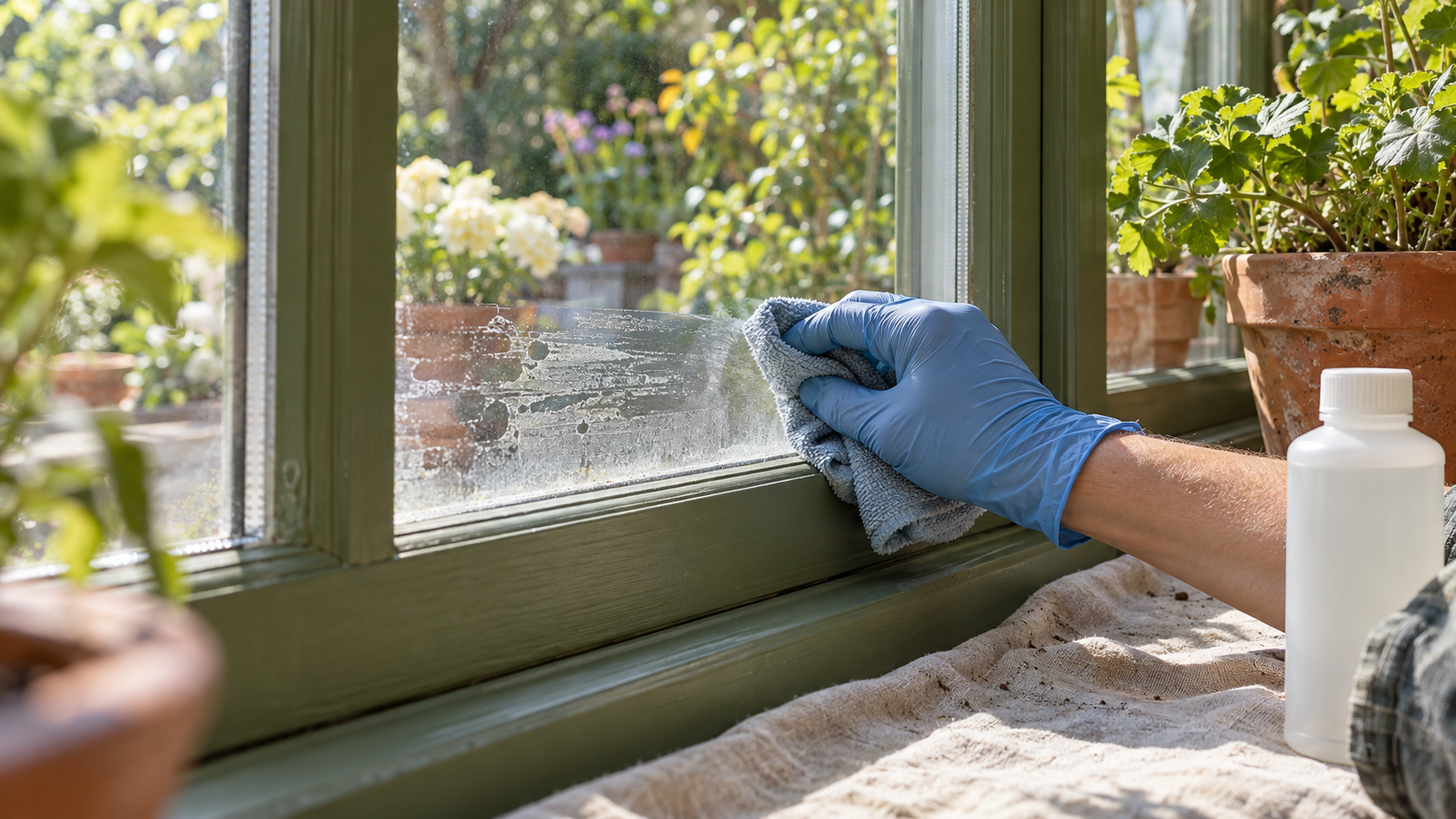
The best window film adhesive remover depends significantly on the type of glass you’re working with, not just on how stubborn the leftover residue is. Standard residential glass tolerates most common removers without issue. Still, Low-E coated glass, architectural glazing, and other specialty glass types require more caution, since certain solvents can interact with coatings differently than they do with plain glass.
This is worth knowing before starting a removal project, especially if you’re working with higher-value or coated commercial glass, where the wrong solvent could cause a costly mistake. Below is a breakdown by glass type of what’s generally safe and what warrants extra caution or professional consultation.
Key Takeaways
- The safest adhesive remover for a given project depends more on the glass type than on how stubborn the residue is.
- Standard residential glass tolerates most common removers (soapy water, isopropyl alcohol, and citrus-based products) with little risk.
- Low-E and other coated glass can react differently to certain solvents than standard glass, so test a small area; it’s necessary, not optional.
- Architectural and specialty glass, common in commercial and higher-end residential settings, generally warrants professional consultation before attempting DIY residue removal.
- Commercial-scale projects with large glass areas involve a different cost-and-time trade-off between gentler and more aggressive remover options.
The Short Answer
The best window film adhesive remover depends on your glass type: standard glass tolerates most common removers, while Low-E coated glass and architectural or specialty glass require more caution and, in many cases, professional consultation before attempting DIY removal.
Confirming your glass type matters more than the residue itself.
Why Glass Type Changes Which Window Film Adhesive Remover Is Safe
Not all glass responds to solvents the same way. Standard uncoated glass resists common household and commercial removers used for adhesive residue. Coated glass, including Low-E glass designed to reflect specific wavelengths of light, has a thin functional layer that some solvents can interact with differently than they interact with the glass surface alone. Architectural and specialty glass, which may include additional coatings, laminates, or specialized treatments, introduces even more variables that a general-purpose remover recommendation doesn’t account for. That’s why a single, universal “best remover” answer doesn’t work equally well in every situation.
This distinction often gets lost in general removal advice, since most guidance assumes a single, standard glass type and applies it broadly, regardless of what a reader’s actual windows involve. A homeowner with standard glass following that general advice will likely have no issues. A facilities manager working with a building’s Low-E curtain wall and following the same generic advice takes on much more risk without realizing it, simply because the guidance wasn’t written with their specific glass type in mind.
How to Identify Your Glass Type Before Starting

Before choosing a remover, it’s worth taking a few minutes to actually confirm what kind of glass you’re working with rather than assuming it’s standard. The most reliable source is often documentation from when the windows were installed, whether that’s a manufacturer spec sheet, builder’s records, or an installer’s invoice.
A Low-E coating can sometimes be detected with a simple flame test: hold a lighter near the glass and observe the reflected flame colors, since a coated pane typically shows one reflection a different color than the others. However, this isn’t foolproof, and professional confirmation is more reliable for anything beyond basic residential glass. For commercial or architectural glass, check with the original glazing contractor or the property’s facilities records rather than guessing.
Standard Glass: Most Window Film Adhesive Removers Are Safe
For standard uncoated residential or commercial glass, common adhesive removers (mild soapy water, isopropyl alcohol, and citrus-based commercial products) generally work without significant risk to the glass itself. This covers most residential window film removal projects and a meaningful share of commercial ones. Still, test a small area before treating the full window, since factors such as window age, prior treatments, or minor existing damage can affect how the surface responds.
Low-E and Coated Glass: What to Avoid
Low-E-coated glass requires more caution than standard glass because certain solvents can affect its functional coating in ways that aren’t always immediately apparent. Window Film Pros notes that adhesive-removal approaches should account for the specific glass and coating types involved rather than defaulting to a single universal method, since this factor directly affects a safe outcome.
For Low-E and other coated glass, start with the gentlest option, typically mild soapy water, and test a small, inconspicuous area before proceeding; treat this as a requirement, not a suggestion. If a gentler approach doesn’t fully resolve the residue, escalating cautiously and re-testing at each step is safer than jumping straight to a stronger solvent.
Architectural and Specialty Glass: Extra Caution
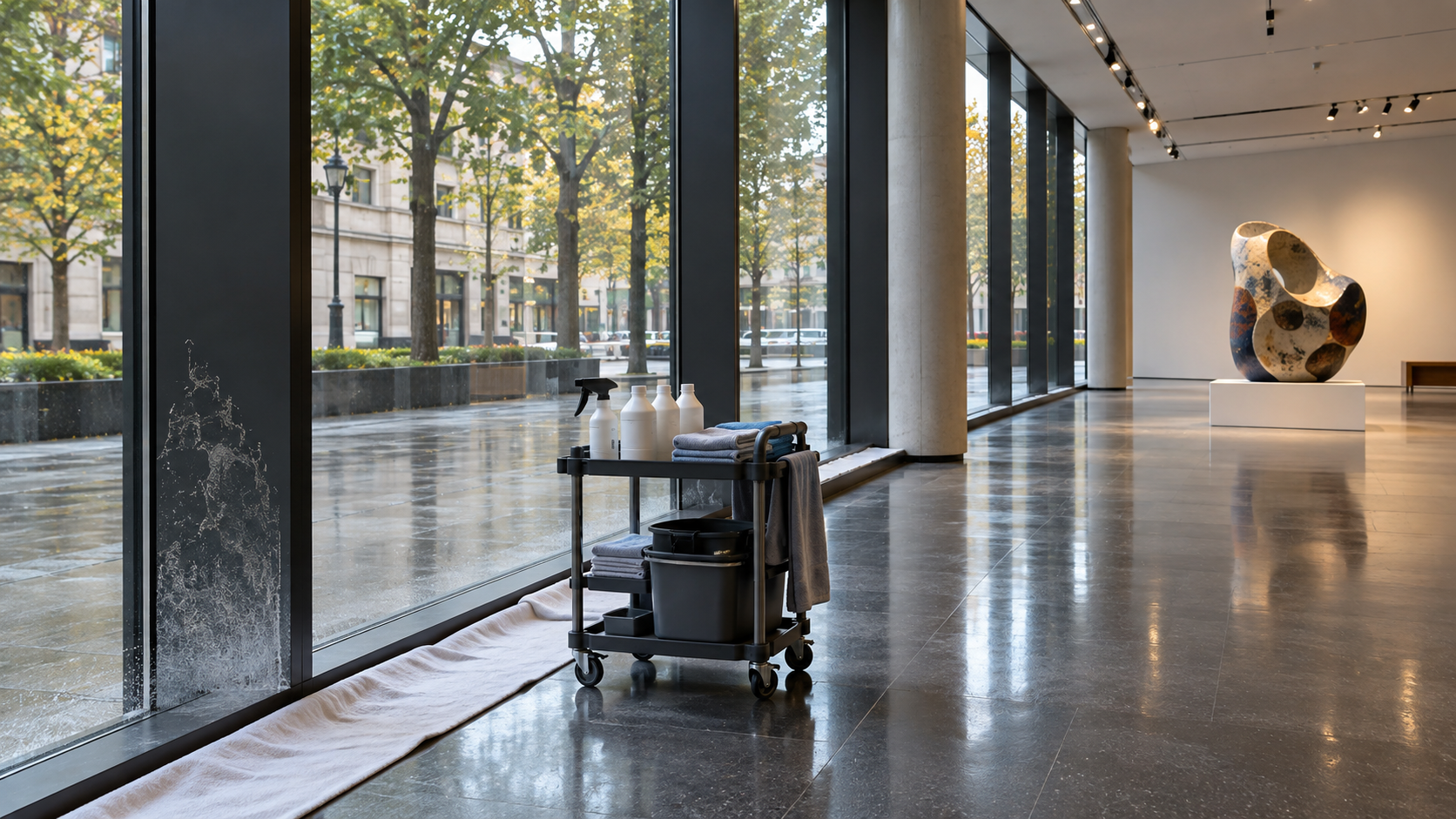
Architectural glass, often found in commercial buildings and higher-end residential construction, can include specialized coatings, laminated layers, or other treatments that make DIY solvent experimentation genuinely risky. The cost of a mistake on this kind of glass, whether that’s coating damage or a visible surface issue, is typically much higher than on standard residential glass, both in repair costs and in the disruption of replacing an architectural glass panel. For this glass type, consulting a professional familiar with your glazing before attempting removal is a reasonable, often necessary precaution, not an optional step like it might be for a single standard residential window.
Commercial-Scale Considerations
For a commercial project with a large total glass area, the cost-benefit calculation for choosing between a gentler and a more aggressive remover differs from that of a single home window. A gentler solvent might take more time and require repeated applications across dozens of windows, while a stronger commercial product could remove residue faster but leave less margin for error if the glass type proves more sensitive than expected. This is why confirming the glass type and coating details across an entire commercial property before starting a large-scale removal project is worth the extra planning time, rather than discovering a coating-sensitive area partway through a multi-window job.
Comparison Table
| Glass Type | Generally Safe Options | Caution Level |
|---|---|---|
| Standard residential/commercial glass | Soapy water, isopropyl alcohol, citrus-based remover | Low; test area still recommended |
| Low-E or coated glass | Mild soapy water first, escalate cautiously with testing | Moderate; test area required |
| Architectural or specialty glass | Professional consultation recommended | High; DIY solvent use not advised without guidance |
Conclusion
There isn’t a single universal window film adhesive remover. It’s whichever option is actually safe for your specific glass type. Standard glass tolerates most common removers with little concern; Low-E and coated glass require testing and caution, and architectural or specialty glass generally warrants professional consultation before applying any solvent. Confirming your glass type before you start, rather than assuming any remover is universally safe, protects both the glass and your project’s outcome.
Frequently Asked Questions
How do I know if my windows have a Low-E coating?
Low-E coatings are often difficult to identify visually, so checking your window manufacturer’s documentation or asking an installer to assess your specific glass is more reliable than guessing.
Is it safe to use the same window film adhesive remover on both standard and coated glass in the same project?
Not necessarily. If a property has a mix of glass types, treating each according to its specific requirements is safer than using a single universal approach across the property.
What should I do if I notice a change in the glass after applying a remover?
Stop immediately and avoid further application to that area. Contact a professional to assess whether the change is cosmetic or indicates coating damage.
Does the age of the glass affect which remover is safe to use?
Older glass and coatings can sometimes be more sensitive than newer ones, which is part of why testing a small area first matters even for glass types generally considered safe.
Is professional removal always necessary for commercial glass?
Not always, but for architectural or specialty glass, professional consultation is a reasonable precaution given the higher cost and complexity if something goes wrong.
Can I ask my window manufacturer directly about safe removers for my specific glass?
Yes, this is often one of the most reliable ways to get accurate, glass-specific guidance rather than relying on general recommendations that may not account for your exact product.
How much extra time should I budget for testing before a full commercial removal project?
This varies by project size, but budgeting time to test a small area of each distinct glass type is a reasonable step before committing to a full-scale approach.
Does using the wrong remover void any warranty on the glass or coating?
This depends on the manufacturer’s warranty terms, so check your documentation before using any solvent on coated or specialty glass.
Is the flame test a reliable way for me to identify Low-E glass?
It can give a reasonable initial indication, but it isn’t foolproof, so treat it as a starting point rather than a definitive answer, especially for a higher-value glass project.
Should I assume commercial glass is coated unless I know otherwise?
It’s a reasonable default assumption for commercial or architectural glass specifically, since coated and specialty glass are common enough in those settings that confirming glass type before starting is worth the extra step.
Not Sure What Your Glass Can Handle?
Getting glass-specific guidance before you start a removal project protects your investment, especially with coated or architectural glass.
Contact Campbell Window Film to talk through your specific situation.