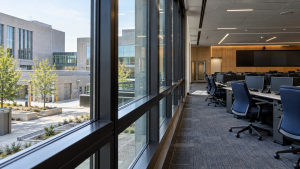
Commercial energy consulting for Irvine corporate campuses is the pre-installation diligence step that turns a window film project from a maintenance line item into a board-ready capital expenditure proposal with documented payback math, utility rebate paperwork, and Title 24 alignment that a facilities director, sustainability lead, or asset manager can present with confidence. The glass-heavy office stock across Irvine Spectrum, Spectrum Center, and the Jamboree Road corporate corridor carries significant, measurable cooling-load exposure from south- and west-facing curtainwall glass, which drives energy costs every summer and creates tenant comfort complaints that make lease renewals harder to secure.
Commercial window tinting services from Campbell Window Film are anchored in an energy consulting process that models the specific building’s sun load, calculates the projected kilowatt-hour savings, identifies applicable Southern California Edison and statewide rebate programs, and produces the documentation that turns the project from a vendor quote into a capital investment decision.
Campbell Window Film serves facilities directors, sustainability officers, corporate real estate teams, and asset managers throughout Irvine and the surrounding areas, including Newport Beach, Costa Mesa, Tustin, Lake Forest, and the broader Orange County commercial corridor.
Why Irvine’s Glass-Heavy Office Stock Has an Energy Problem
Irvine’s corporate campus architecture reflects the design priorities of the development cycles that built it. The major office parks along Irvine Spectrum, the Von Karman Avenue corridor, and Jamboree Road were developed and expanded from the 1980s through the 2000s with large curtainwall glass facades that maximize daylighting and create the open, contemporary aesthetic that corporate tenants have preferred. That glass coverage is also the primary driver of the cooling load problem that Irvine facilities teams manage every summer.
Southern California’s climate creates an asymmetric energy burden for glass-heavy commercial buildings. The cooling season in Irvine runs from April through October, with peak demand concentrated in July and August when direct sun on south- and west-facing glass elevations produces heat gain that exceeds the capacity of many buildings’ heating, ventilation, and air conditioning systems to manage without extended runtime and elevated energy consumption. Buildings with significant west-facing curtainwall exposure along Jamboree and the Spectrum corridors are among the most energy-intensive in the Irvine commercial market during these peak months.
For Irvine corporate campuses with sustainability reporting commitments, the energy cost dimension of unmanaged glass performance is also a carbon and emissions reporting dimension that sustainability leads are increasingly required to address. Understanding how commercial building windows affect energy efficiency is the foundational context for the energy consulting process that Campbell Window Film brings to Irvine campus projects.
What an Energy Consulting Engagement Includes

Site Survey and Orientation Analysis
The consulting process begins with a physical site survey that documents the building’s glass coverage by elevation and orientation, the existing glass specifications, including any factory coatings or existing film; the frame system configuration; and the current interior conditions on the highest-exposure floors. Orientation analysis maps the building’s glass exposures against the sun path for Irvine’s latitude to identify the specific elevations and hours of the day that produce the most significant solar heat-gain events.
Sun-Load and Cooling-Load Modeling
Solar heat gain modeling calculates the amount of solar energy entering the building through each treated elevation under peak and average conditions. It translates it into the cooling load the building’s mechanical system must manage. The model produces baseline energy consumption data that establishes the current condition before any film installation.
The model is then run with the proposed film specification applied to the target elevations, producing projected post-installation energy consumption data and the difference between the two conditions expressed in kilowatt-hours per year. This projected savings number is the foundation for the payback calculation and the utility rebate application.
Payback, Net Present Value, and Internal Rate of Return for the Film Recommendation
Campbell Window Film produces a financial analysis for every Irvine energy consulting engagement, expressing the film investment in terms that corporate real estate and finance teams use to evaluate capital expenditures. The payback period, which is the time required for energy savings to equal the installation cost, typically falls within the three- to five-year range for Irvine commercial buildings with significant west- or south-facing glass exposure. The net present value calculation discounts the future energy-savings stream to present value using the organization’s cost of capital, yielding a dollar figure that represents the net benefit of the investment in current terms. The internal rate of return expresses the investment’s yield as an annual percentage, allowing it to be compared with the organization’s other capital investment options.
These three financial metrics, expressed in a written analysis with documented assumptions, are the output that converts a window film recommendation into a board-ready capital proposal.
Title 24 Compliance: What Window Film Can and Cannot Do
California Title 24 is the state’s building energy efficiency standards code. Title 24 prescribes minimum performance requirements for building envelope components, including glazing, and those requirements apply to new construction and to significant renovations that trigger a Title 24 compliance review.
Window film installed on existing glass as an operational improvement does not, in itself, bring a non-compliant building into Title 24 compliance in the formal code sense. Title 24 compliance is a construction permit and plan check process, and film applied to existing glass without a triggering construction permit does not enter that process.
What window film does is improve the energy performance of the existing glazing system, bringing the building’s actual operating performance closer to the Title 24 standard for new construction. For Irvine corporate campuses reporting energy performance under voluntary frameworks or preparing for a renovation that will trigger a Title 24 review, documented energy performance improvements from solar film contribute to the building’s performance baseline, supporting both operational reporting and pre-renovation planning.
Campbell Window Film provides performance documentation for every Irvine commercial project that accurately represents what the film does and does not do in the context of Title 24, so that facilities and legal teams have a defensible record for any compliance context in which the installation is referenced.
Southern California Edison and Statewide Rebates Available in 2026
Southern California Edison and California’s statewide energy-efficiency programs, administered by the California Public Utilities Commission, have historically offered commercial energy-efficiency rebates that may include rebates for qualifying window-film installations. The specific programs available in 2026, their eligibility requirements, and their rebate amounts are subject to changes in program cycles. They should be confirmed directly with Southern California Edison and the relevant program administrator before being included in a project financial model.
Campbell Window Film manages the rebate documentation process for Irvine commercial clients, including pre-installation baseline documentation, product specification documentation, and the post-installation submission package required for rebate applications. For a current overview of California energy-efficiency rebate programs and how window film qualifies, our post on California energy-efficient window rebates provides the most up-to-date guidance available.
The rebate amount available for a specific Irvine commercial project depends on the building’s energy baseline, the projected kilowatt-hour savings from the installation, the current program incentive rate, and the total glass area treated. Campbell Window Film provides rebate projections as part of the energy consulting engagement, with appropriate documentation of the assumptions and the program confirmation required before the numbers are treated as committed.
Submetering, Tenant Recovery, and Sustainability Reporting
For Irvine commercial buildings with multiple tenants, where energy costs are recovered through net leases or operating expense reconciliations, the cooling load reduction from solar film on common-area and building-perimeter glass has a direct tenant-recovery dimension. Reducing common area energy consumption reduces the operating expense pool allocated to tenants, improving the building’s competitive net effective rent position and simplifying year-end operating expense reconciliation.
For buildings pursuing or maintaining sustainability certifications, documented energy performance improvements from solar film contribute to the reporting metrics that those certifications track. Solar window film for commercial buildings covers the specific energy performance documentation that certification programs typically require.
Commercial building solutions from Campbell Window Film cover the full range of commercial glass products for Irvine corporate campuses, extending beyond solar control and energy consulting.
Sample Results From Comparable Irvine Campuses
Irvine corporate campus buildings with significant south- and west-facing curtainwall glass that have completed solar film installations through Campbell Window Film’s energy consulting process have consistently documented cooling load reductions of 30 to 50 percent on treated elevations during peak summer months. The specific outcomes depend on the building’s baseline glass performance, the installed film specification, and the mechanical system’s response to the reduced load.
The financial outcomes from these installations have consistently yielded payback periods in the three- to five-year range, with net present value analyses supporting capital expenditure approval at the typical return threshold for corporate real estate improvement projects. Buildings where the consulting process identified applicable Southern California Edison rebates have reduced the net installation cost and correspondingly shortened the payback period.
How to Scope a Request for Proposal for an Energy Consulting Engagement
Irvine facilities directors and corporate real estate teams who want to initiate an energy consulting engagement for a window film project should scope the request for proposal to include the following components: sun-load and cooling-load modeling methodology and assumptions documentation, financial analysis including payback period, net present value, and internal rate of return with documented discount rate assumptions, Title 24 alignment analysis, utility rebate identification and documentation support, and a written project scope with film specification, coverage area, and installation timeline.
Campbell Window Film provides all of these components as standard deliverables for every Irvine commercial energy consulting engagement.
Contact Campbell Window Film today to schedule an energy consulting conversation for your Irvine corporate campus and receive a scoped engagement proposal tailored to your building’s energy profile, sustainability reporting requirements, and capital expenditure timeline.
Frequently Asked Questions
How accurate are the kilowatt-hour savings projections?
Energy savings projections from solar film modeling are estimates based on documented assumptions about the building’s baseline glass performance, the film specification’s solar heat gain reduction, the building’s occupancy and operating hours, and the local climate data for Irvine. The accuracy of the projection depends on the quality of the baseline data and the modeling methodology. Campbell Window Film uses recognized energy modeling approaches and documents all assumptions in the written analysis, so that facilities teams and finance reviewers can evaluate the basis for the projections. Actual post-installation results vary with occupancy changes, mechanical system response, and weather conditions, and Campbell Window Film does not guarantee specific kilowatt-hour outcomes.
Can window film alone make a building Title 24 compliant?
Window film applied to existing glass as an operational improvement does not, by itself, bring a building into Title 24 compliance in the formal building-code sense. Title 24 compliance is a code process triggered by new construction or significant renovation permits. What solar film does is improve the building’s actual energy performance in a documented, measurable way, moving its operating condition closer to the performance standard prescribed by Title 24. For Irvine buildings preparing for a renovation that will trigger a Title 24 review, film-improved baseline performance can support the glazing compliance pathway in the renovation design.
What rebates are available for Irvine commercial properties?
Southern California Edison and California’s statewide energy efficiency programs have historically offered commercial rebates that may include qualifying window film installations. The specific programs, eligibility requirements, and incentive amounts available in 2026 are subject to change based on program cycles. They should be confirmed directly with Southern California Edison before being included in a project financial model. Campbell Window Film manages rebate documentation and submission support for every Irvine commercial project where applicable programs are confirmed.
How is energy consulting priced, fixed fee or contingency?
Campbell Window Film structures energy consulting engagements for Irvine commercial projects as a fixed-fee scope defined during the initial project conversation, based on building size, the number of elevations being analyzed, and the complexity of the financial and rebate documentation required. The consulting fee is typically incorporated into the overall project proposal, so that the analysis and installation costs are presented as a single integrated project investment.
Will window film qualify for Leadership in Energy and Environmental Design (LEED) Energy and Atmosphere credits?
Solar control window film that improves a building’s energy performance can contribute to the energy efficiency baseline documentation that supports Leadership in Energy and Environmental Design energy and atmosphere credit pathways in certain certification contexts. Whether a specific film installation qualifies for a specific credit in a specific Leadership in Energy and Environmental Design project depends on the certification version, the credit pathway being pursued, and how the energy improvement is documented and modeled in the certification submission. Campbell Window Film provides energy performance documentation for every Irvine commercial project and recommends that certification teams confirm how the documented improvement fits within their specific certification pathway before including it in the credit strategy.