A campus is never just one building. Campbell Window Film treats each classroom, entryway, and shared space as its own problem to solve, matching the right film to each one so the fix stays out of sight and out of the way of teaching and learning.
Large Scale Solutions
Trusted Since 1988
Award Winning Service
Safety Trained Professionals
Large Scale Solutions
Trusted Since 1988
Award Winning Service
Safety Trained Professionals
Architectural solar film is installed on office buildings, retail storefronts, hospitality spaces, healthcare facilities, and residential properties to improve interior comfort and enhance building performance without replacing existing windows.
These solutions help manage daylight exposure, improve visibility near glass, and preserve interior finishes in spaces with consistent sun exposure.
A school building doesn’t get to close for repairs mid-semester, so every Campbell project is planned around the calendar the campus already runs on.
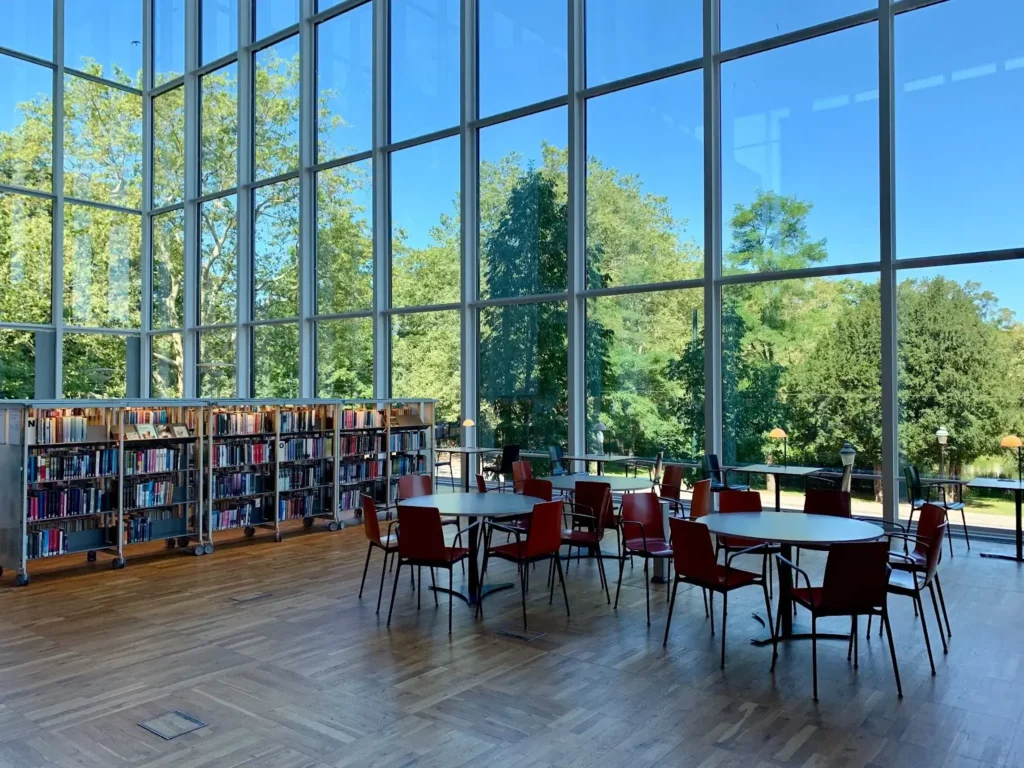
Cuts down heat and glare in classrooms and libraries, so rooms stay usable and comfortable through the parts of the day when the sun hits hardest.
Branding and wayfinding graphics applied directly to interior glass, useful for schools that want their identity visible throughout a building, not just at the entrance.
Applies a pattern to large glass walls and facades that birds can see and avoid, while staying nearly invisible to people walking by.
Helps prevent bird collisions on tall storefront windows and glass walls, applied in a pattern that’s barely noticeable from the sidewalk.
Branded and printed film that helps visitors navigate large campuses while reinforcing your facility’s identity on interior glass.
Glass that toggles between clear and private at the flip of a switch, built for rooms like counseling offices, where privacy is only needed some of the time.
Solar control film handles the heat and glare in classrooms, while decorative or privacy film goes to work in administrative offices, with the mix shifting depending on grade level: younger schools often need more privacy around the front office, larger high schools need more solar coverage across more glass.
Decorative film, built around school colors and branding, is paired with solar control across classrooms, so the campus reinforces its identity on the glass itself without sacrificing comfort in the rooms where it matters most.
A campus spread across multiple buildings and decades of construction styles rarely needs one film. Solar control covers heat and glare in lecture halls; safety and security film goes on entrances and high-traffic corridors; and the mix adjusts from building to building.
Lecture halls, labs, and administrative buildings on the same campus often call for solar control in classrooms and safety film at entrances, applied consistently even when the buildings themselves were never designed as one system.
Solar control film cuts glare in play and learning areas; safety and security film adds a layer of protection at entrances; and privacy or switchable film covers rooms where more sensitive conversations occur.
Workshop spaces receive safety and security film for heavy daily wear, while solar control covers standard classrooms and administrative offices on the same campus.
The academic calendar sets the terms, and Campbell Window Film works inside it rather than asking a school to work around us. Our team talks directly with facilities staff to lock in windows, whether that’s summer break, a holiday stretch, or after-hours access, where the work can happen without a single student or teacher noticing it in progress.
Each building gets its own assessment and its own film recommendation, then gets folded into a phased schedule so no two areas are torn up at once. When a room is finished, it’s finished: cleaned, ready, and off the list, with nothing left behind and no second visit required.
Glare doesn’t announce itself the way a broken window does, but it adds up. A whiteboard that’s hard to read from the back row, or a projector screen washed out by afternoon sun, chips away at a lesson every single day; it happens. That’s a cost most facilities teams don’t measure until someone points it out.
Unsecured glass near entrances and hallways is a more visible gap, and one that’s become a bigger part of how districts think about campus security overall. Meanwhile, counseling offices, health suites, and other rooms built for private conversations need glass that actually delivers privacy, not just a closed door. Window film addresses all three of these (glare, entry-point safety, and interior privacy) without construction crews, extended closures, or anything that distracts from the school day itself.
Most of the payoff shows up fast. Classrooms and shared spaces become noticeably more comfortable once solar film is installed, as reflected in fewer glare complaints and an easier workday for staff. At entrances and corridors, security film adds a layer of resistance without changing how the building looks from the parking lot.
Interior glass becomes useful real estate for identity and wayfinding once decorative or custom graphic film goes in, something schools and colleges often don’t think to use until it’s pointed out. And because UV-blocking film slows how fast sunlight wears down furniture, flooring, and finishes, the investment keeps paying off long after installation, in maintenance costs that don’t show up as often.
Three things drive cost more than anything else: how much glass is on campus, which products get chosen for which spaces, and how much scheduling room the district can offer. A sprawling multi-building campus is going to need more material and more installation time than a single school building, and that shows up in both the timeline and the budget.
It’s rare for a single film type to cover an entire campus. A typical project might mean solar control in classrooms, security film at entry points, and something decorative in the front office: three different specs, three different labor requirements. That’s why every quote starts with walking the campus first, not with a flat per-square-foot number.

We walk through every building on your campus, evaluate the condition of the glass, and identify performance and safety priorities before recommending a product.

We build the installation timeline around summer break, holidays, or after-hours access so students and staff experience zero disruption.

Our team works efficiently across buildings, leaving each space ready for immediate use once the job is finished.
Most districts lean toward summer break, since it gives our team full access without working around a live class schedule. The earlier you reach out, the better your odds of locking in those dates before they fill up.
Yes. Cutting glare at the source makes a real difference in how easy a whiteboard or projector is to read from anywhere in the room, not just the front few rows.
Standard safety and security film covers most entrances. For higher-priority access points, reinforced security glazing is available. Which one makes sense depends on the glass already in place and how the district is thinking about entry security.
Yes. Both frosted and switchable options go directly onto existing glass, so there’s no need to swap it out, which keeps the cost and timeline manageable for smaller, sensitive rooms.
It does, by cutting the UV exposure that causes fading over time. Furniture, flooring, and finishes retain their appearance longer once exposure is reduced.
K-12 schools, universities, community colleges, childcare centers, and vocational programs are all part of our regular client base.
Tell us about your campus, and we’ll map out an installation plan that fits your academic calendar instead of fighting it. Campbell Window Film offers heat control, security, branding, and privacy for schools and educational facilities of all sizes.